FEED ● NOMINALDATA 2026-11-22 14:27 CTSOURCES: X API · WIKIMEDIA · GROKIPEDIA
INDEX / CASE FILES / BFI-0105
← BACK TO THE INDEX
UNPROVEN CASE FILE BFI-0105 · ERA 2020–
COVID-19 Lab Leak
Once dismissed as a conspiracy theory, now the leading view of several U.S. agencies. Still not proven.
BriefingUNPROVEN
The lab-leak hypothesis holds that SARS-CoV-2 escaped from a laboratory in Wuhan, China, most often the Wuhan Institute of Virology, rather than spilling over naturally from animals. Early on it was widely dismissed. Since 2023 several U.S. intelligence agencies have leaned toward a lab origin, but with low or moderate confidence, and no decisive evidence has emerged either way.
On the record✓ DOCUMENTED
An August 2021 U.S. intelligence assessment found no consensus. The FBI favors a lab-related origin with moderate confidence, the Department of Energy with low confidence, and in January 2025 the CIA said a lab leak was more likely, with low confidence. In April 2025 the White House replaced covid.gov with a page backing the lab-leak view. On November 18, 2026 NIH Director Jay Bhattacharya asked Nature Medicine to investigate the authorship of the 2020 'Proximal Origin' paper that argued against a lab construct.
Key claims vs evidence3
UNPROVEN
Claim: The virus leaked from a Wuhan lab.
EVIDENCE: Plausible and favored by some agencies, but assessed with low-to-moderate confidence; no direct evidence such as a progenitor virus in lab records has been made public.
UNPROVEN
Claim: The virus was deliberately engineered as a bioweapon.
EVIDENCE: U.S. intelligence assessed in 2021 that it was not developed as a biological weapon.
PARTIALLY CONFIRMED
Claim: Officials shaped the 2020 'Proximal Origin' paper.
EVIDENCE: Emails show Fauci, Collins and Farrar joined a February 2020 call with authors and saw drafts. Whether that warranted authorship is disputed; author Ian Lipkin says it was not ghostwritten.
STATUS VERDICT · UNPROVEN
Unproven, but no longer fringe. Several agencies favor a lab origin with limited confidence; natural spillover has not been ruled out. The bioweapon version is unsupported.Claimed or alleged; no verified evidence settles it.
Timeline7 entries
2019-12✓ DOCUMENTED
Outbreak in Wuhan
A cluster of pneumonia cases is reported in Wuhan, China.
2020-03-17✓ DOCUMENTED
'Proximal Origin'
Nature Medicine publishes a correspondence arguing the virus is not a lab construct.
2021-08-27✓ DOCUMENTED
IC assessment
U.S. intelligence agencies split; no consensus on origin.
2023✓ DOCUMENTED
FBI and DOE views
The FBI (moderate confidence) and Energy Department (low confidence) favor a lab-related origin.
2025-01✓ DOCUMENTED
CIA shift
The CIA assesses with low confidence that a lab leak is more likely.
2025-04✓ DOCUMENTED
White House page
covid.gov is replaced with a page promoting the lab-leak view.
2026-11-18✓ DOCUMENTED
NIH letter
NIH Director Jay Bhattacharya asks Nature Medicine to review the 2020 paper's authorship.
Key figures
Jay Bhattacharya · NIH director; Nov 2026 letter to Nature Medicine
Anthony Fauci · Former NIAID director
Francis Collins · Former NIH director
Wuhan Institute of Virology · Coronavirus research lab at the center of the hypothesis
Open questions
- Will early Wuhan lab records or samples ever be released?
- Will Nature Medicine open an authorship review?
#12Trending now
3,163X posts · 7 days
▼8%Momentum
Daily, Nov 16–21
WHY NOW: NIH Director Bhattacharya's Nov 18 letter asking Nature Medicine to review the 'Proximal Origin' paper.
Momentum = average daily posts Nov 19–21 vs Nov 16–18. Query:
Momentum = average daily posts Nov 19–21 vs Nov 16–18. Query:
("lab leak" OR "plandemic" OR "gain of function") -is:retweetExhibits · public domain1
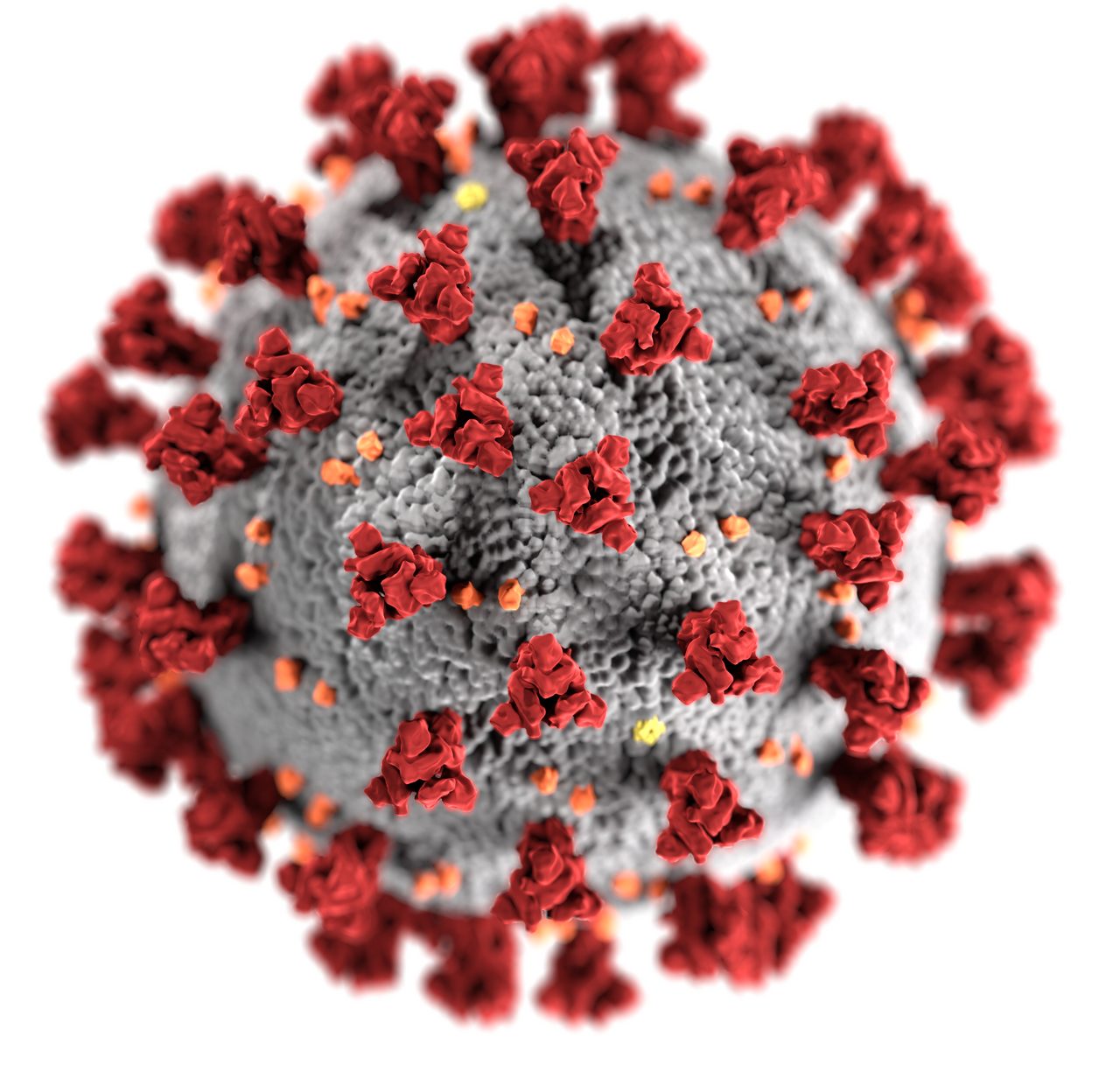
Credit: CDC/ Alissa Eckert, MS; Dan Higgins, MAM · Public domain (verified on Wikimedia Commons) · source
Primary documents
PRIMARY RECORD
White House: Lab Leak, the true origins of COVID-19 ↗
PRIMARY RECORD
Nature Medicine: 'The proximal origin of SARS-CoV-2' (2020) ↗
Sources (5) · Grokipedia first
✓ PRIMARY · GROKIPEDIA
Grokipedia: COVID-19 lab leak theory ↗
✓ GROKIPEDIA · RELATED
Grokipedia: Origin of SARS-CoV-2 ↗
✓ GROKIPEDIA · RELATED
Grokipedia: Wuhan Institute of Virology ↗
✓ PRIMARY RECORD
White House: Lab Leak, the true origins of COVID-19 ↗
✓ PRIMARY RECORD
Nature Medicine: 'The proximal origin of SARS-CoV-2' (2020) ↗
Other case files 21
BFI-0101 · PARTIALLY CONFIRMEDEpstein: The Death and the FilesBFI-0023 · UNPROVENUAP Disclosure and Crash-Retrieval ClaimsBFI-0106 · UNPROVENThe Deep StateBFI-0107 · PARTIALLY CONFIRMEDFalse Flag OperationsBFI-0102 · UNPROVENThe Great Reset and the New World OrderBFI-0103 · UNPROVENThe Bigfoot FilesBFI-0109 · UNPROVENThe Cyber Outage FilesBFI-0104 · DEBUNKEDFlat EarthBFI-0032 · DEBUNKEDChemtrailsBFI-0108 · DEBUNKEDThe 'Depopulation' Plot: Vaccines and ElitesBFI-0007 · CONFIRMEDProject MKUltraBFI-0011 · UNPROVENJFK AssassinationBFI-0072 · UNPROVENHavana Syndrome and Directed-Energy WeaponsBFI-0081 · CONFIRMEDWatergateBFI-0051 · PARTIALLY CONFIRMEDArea 51BFI-0019 · CONFIRMEDOperation NorthwoodsBFI-0091 · DEBUNKED9/11 Inside-Job TheoriesBFI-0069 · DEBUNKEDMoon Landing HoaxBFI-0064 · PARTIALLY CONFIRMEDGulf of Tonkin, August 1964BFI-0082 · CONFIRMEDTuskegee Syphilis StudyBFI-0059 · UNPROVENRoswell, 1947