
FEED ● NOMINALDATA 2026-11-22 14:27 CTSOURCES: X API · WIKIMEDIA · GROKIPEDIA
INDEX / CASE FILES / BFI-0082
← BACK TO THE INDEX
CONFIRMED CASE FILE BFI-0082 · ERA 1932–1972
Tuskegee Syphilis Study
For 40 years the U.S. Public Health Service watched Black men go untreated for syphilis.
BriefingCONFIRMED
Beginning in 1932, the U.S. Public Health Service enrolled 600 Black men in Macon County, Alabama, to study untreated syphilis. The men were not told they had the disease and were denied treatment, even after penicillin became standard in the 1940s. A whistleblower and press reports ended the study in 1972.
On the record✓ DOCUMENTED
Of the 600 men, 399 had syphilis and 201 did not. Penicillin was the treatment of choice by 1947 but was not offered. The Associated Press exposed the study in July 1972, and it ended that year. A 1974 settlement paid $10 million, and President Bill Clinton formally apologized on May 16, 1997.
Key claims vs evidence2
CONFIRMED
Claim: The government deceived and denied treatment to Black men.
EVIDENCE: Confirmed by government records and the 1997 presidential apology.
DEBUNKED
Claim: The men were deliberately infected with syphilis.
EVIDENCE: A common misconception; the men already had the disease. The Guatemala experiments (1946–48) did involve deliberate infection.
STATUS VERDICT · CONFIRMED
Confirmed. A documented 40-year government study built on deception.Established by official records, court findings or admissions.
Timeline5 entries
1932✓ DOCUMENTED
Study begins
USPHS enrolls 600 Black men in Macon County, Alabama.
1947✓ DOCUMENTED
Penicillin standard
Penicillin is the standard treatment, but the men are not offered it.
1972-07-25✓ DOCUMENTED
Exposed
An Associated Press story by Jean Heller reveals the study.
1974✓ DOCUMENTED
Settlement and law
A $10 million settlement; the National Research Act reshapes human-subjects rules.
1997-05-16✓ DOCUMENTED
Apology
President Clinton apologizes on behalf of the nation.
Key figures
Peter Buxtun · PHS employee who blew the whistle
Jean Heller · AP reporter who broke the story
Bill Clinton · Issued the 1997 apology
Open questions
- How did the study survive internal reviews for four decades?
#9All-time
5.4MWikipedia views 2015–26
Yearly views 2016–2025 of the English Wikipedia article (human traffic; 5,445,151 total, Jul 2015 – Oct 2026).
Exhibits · public domain1
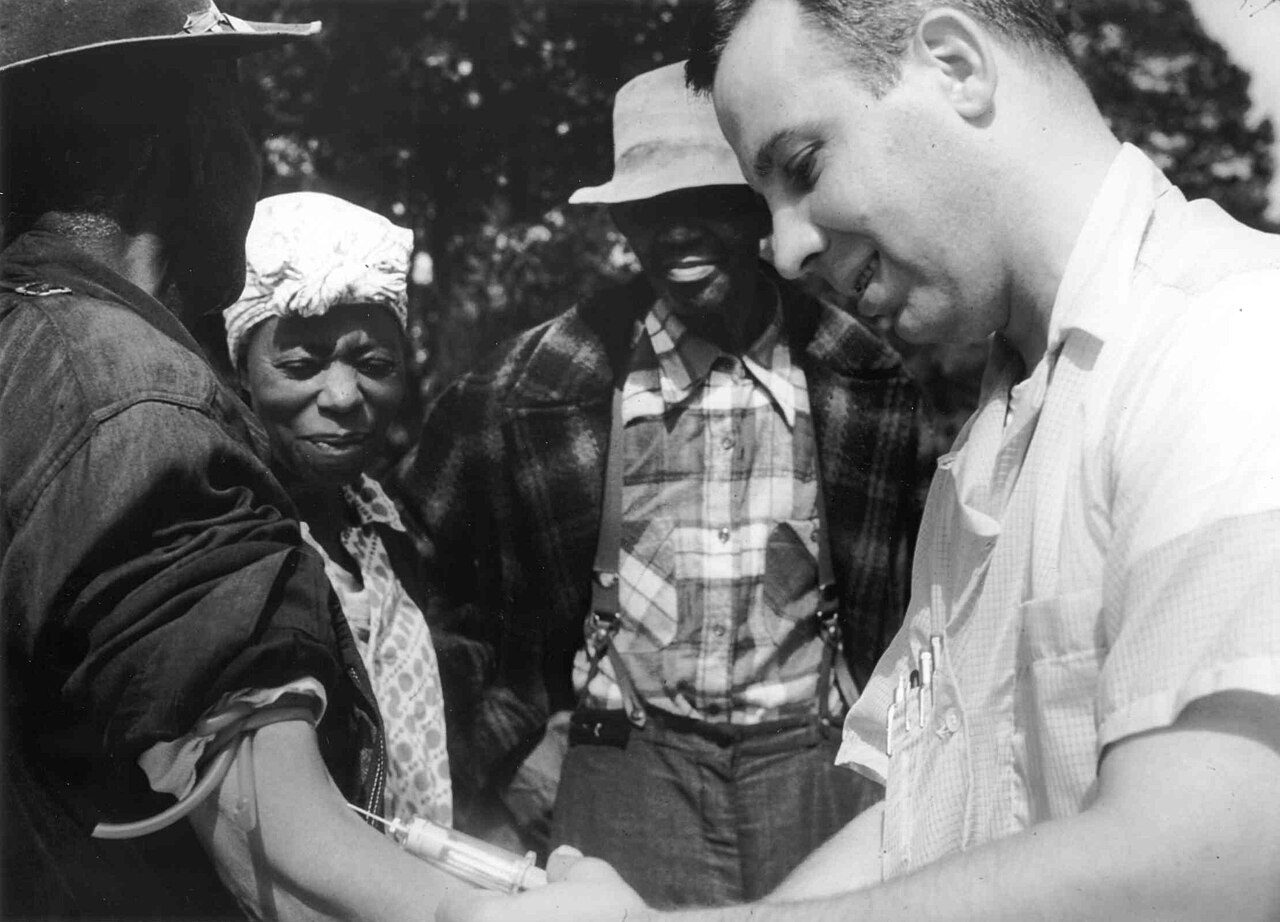
Credit: National Archives at Atlanta (U.S. government) · Public domain (verified on Wikimedia Commons) · source
Other case files 21
BFI-0101 · PARTIALLY CONFIRMEDEpstein: The Death and the FilesBFI-0023 · UNPROVENUAP Disclosure and Crash-Retrieval ClaimsBFI-0106 · UNPROVENThe Deep StateBFI-0107 · PARTIALLY CONFIRMEDFalse Flag OperationsBFI-0102 · UNPROVENThe Great Reset and the New World OrderBFI-0103 · UNPROVENThe Bigfoot FilesBFI-0109 · UNPROVENThe Cyber Outage FilesBFI-0104 · DEBUNKEDFlat EarthBFI-0032 · DEBUNKEDChemtrailsBFI-0108 · DEBUNKEDThe 'Depopulation' Plot: Vaccines and ElitesBFI-0007 · CONFIRMEDProject MKUltraBFI-0105 · UNPROVENCOVID-19 Lab LeakBFI-0011 · UNPROVENJFK AssassinationBFI-0072 · UNPROVENHavana Syndrome and Directed-Energy WeaponsBFI-0081 · CONFIRMEDWatergateBFI-0051 · PARTIALLY CONFIRMEDArea 51BFI-0019 · CONFIRMEDOperation NorthwoodsBFI-0091 · DEBUNKED9/11 Inside-Job TheoriesBFI-0069 · DEBUNKEDMoon Landing HoaxBFI-0064 · PARTIALLY CONFIRMEDGulf of Tonkin, August 1964BFI-0059 · UNPROVENRoswell, 1947